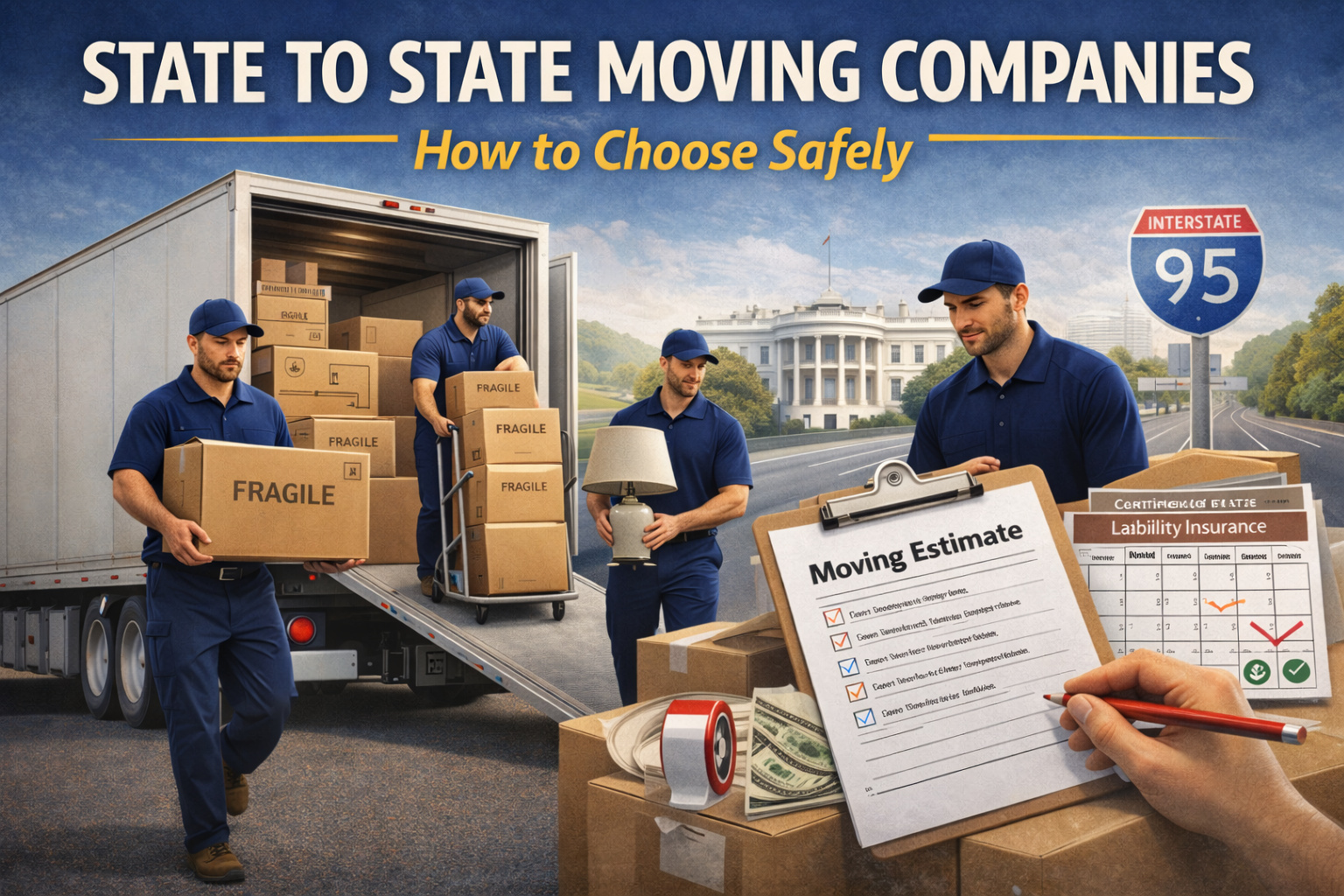
Moving across state lines is more complex than a local move. State to state moving companies are federally licensed carriers that transport household goods under FMCSA rules. Costs depend on distance, shipment size, services, and delivery windows. Choosing a qualified interstate mover protects your budget, timeline, and belongings by providing written estimates, proper valuation coverage, documented inventories, and coordinated logistics for a safer moving out of state experience overall process.
Quick Answer: What to Expect When Moving Out of State
State to state moving companies are FMCSA-registered carriers authorized to transport household goods across state lines. Costs depend on distance, shipment weight or volume, service add-ons, and delivery window flexibility. Reliable movers provide written estimates (binding or non-binding), documented inventories, valuation options, and clear delivery windows aligned with a moving out of state checklist to reduce delays, disputes, and surprise charges.
State to State Moving Companies Essentials
-
-
Interstate moves follow federal (FMCSA) rules, not local ones
-
Pricing depends on distance, shipment size, and services
-
Written estimates and inventories reduce surprise charges
-
Delivery windows matter more than pickup speed
-
Experience lowers risk when moving out of state
-
Why Interstate Moves Require More Planning Than You Expect
Moving out of state adds complexity that local moves do not have. Different licensing rules apply, delivery timelines are longer and less predictable, and shipments may share truck space with other customers. A single delay can affect housing access, start dates for work, storage costs, and temporary lodging.
This is where state to state moving companies differ from local movers. Interstate carriers manage compliance, routing, multi-jurisdiction scheduling, and documentation. Without planning, customers often face missed delivery windows, storage-in-transit fees, or disputes over damage claims.
Long-distance moves also increase risk exposure. Items are handled multiple times, weather and traffic compound delays, and access limitations at origin or destination can trigger extra services. Proper planning shifts risk from the customer to the mover through contracts, valuation coverage, and documented processes.
Why Trust This Guide?
This guidance reflects how federally licensed interstate movers operate under FMCSA regulations. Pricing structures, delivery windows, estimate types, and liability rules follow industry standards rather than marketing claims.
The recommendations align with real-world relocation patterns, such as shared truckloads, interstate routing constraints, seasonal demand spikes, and formal claims-resolution processes used by compliant carriers.
What Actually Determines the Cost of an Interstate Move
Understanding pricing helps you compare quotes accurately. State to state moving companies do not price moves like local movers. Interstate pricing is based on measurable shipment and transit factors rather than hourly labor.
Key pricing factors include:
-
-
Distance between origin and destination
-
Shipment weight or volume (estimated before loading)
-
Packing or unpacking services
-
Furniture disassembly, reassembly, or specialty items
-
Storage-in-transit requirements
-
Delivery window flexibility and access conditions
-
Below is a realistic cost range for common interstate moves:
|
Home Size |
Distance Range |
Estimated Cost |
|
Studio / 1-bedroom |
500–1,000 miles |
$2,000–$4,000 |
|
2-bedroom |
1,000–2,000 miles |
$3,500–$6,500 |
|
3-bedroom |
2,000+ miles |
$6,000–$9,000 |
Extremely low quotes often exclude fuel surcharges, long-carry fees, shuttle services, packing materials, or storage-in-transit. Reliable state to state moving companies explain inclusions clearly and issue binding or non-binding written estimates. When moving out of state, transparency matters more than headline price.
Key Terms You Should Understand Before Booking
State to state moving companies
Federally licensed movers are authorized to transport household goods across state lines.
Binding estimate
A written estimate that guarantees the total price for the listed services.
Non-binding estimate
An estimate based on projected shipment size; final cost may change, but federal rules limit what can be collected at delivery.
Moving out of state checklist
A planning tool that tracks documents, utilities, packing tasks, mover coordination, and delivery readiness.
Valuation coverage
The level of liability protection selected for your shipment ranges from basic coverage to full-value protection.
Understanding these terms helps you compare providers accurately and avoid costly misunderstandings.
How Geography Changes an Interstate Move
Distance matters, but geography often matters more. Routes between major metros frequently rely on interstate corridors such as I-95, I-10, I-40, or I-70. These lanes support efficiency but also experience congestion, construction, and seasonal delays.
-
-
Coastal cities may involve dense urban access limits and parking restrictions
-
Mountain routes increase elevation, weather exposure, and transit time
-
Southern routes often move faster, but expose shipments to heat and humidity
-
Northern routes can slow down during winter storms and freeze cycles
-
Typical lane-based considerations:
|
Move Example |
Primary Complexity Driver |
Cost Pressure |
|
Major metro → major metro |
Congestion, delivery windows |
Medium |
|
Metro → rural |
Long-carry or shuttle services |
High |
|
Winter mountain routes |
Weather delays |
Medium–High |
Understanding regional factors helps movers plan realistic delivery windows and reduces last-minute disruptions when moving out of state.
What Movers Include by Default—and What Costs Extra
Interstate movers separate base transportation from optional services. Knowing the difference helps you control total cost.
Standard services usually include:
-
-
Loading and unloading household goods
-
Transportation across state lines
-
Basic furniture protection
-
Assigned truck and crew
-
Required federal paperwork (estimate, bill of lading, inventory)
-
Optional services that may cost extra:
-
-
Full or partial packing
-
Boxes, paper, and specialty materials
-
Furniture disassembly and reassembly
-
Appliance servicing
-
Storage-in-transit
-
Shuttle or long-carry services
-
Guaranteed delivery windows
-
Some providers keep base quotes low and charge heavily for add-ons. Review service lists carefully before signing, especially if your checklist for moving out of state includes packing or storage needs.
When Timing Makes the Biggest Difference
Timing affects pricing, availability, and risk. Summer is peak season for interstate moves, with higher demand and tighter delivery windows. Late spring and early fall typically offer the best balance of weather and availability.
Winter moves often cost less, but snow, ice, and mountain pass closures increase the risk of delays. Mid-week pickups usually move faster than weekends, and mid-month dates avoid lease turnover congestion.
Booking early gives you leverage. Last-minute bookings reduce options and increase exposure to unreliable operators. Planning is one of the most effective ways to reduce stress when moving out of state.
The Real Pros and Cons of Interstate Movers
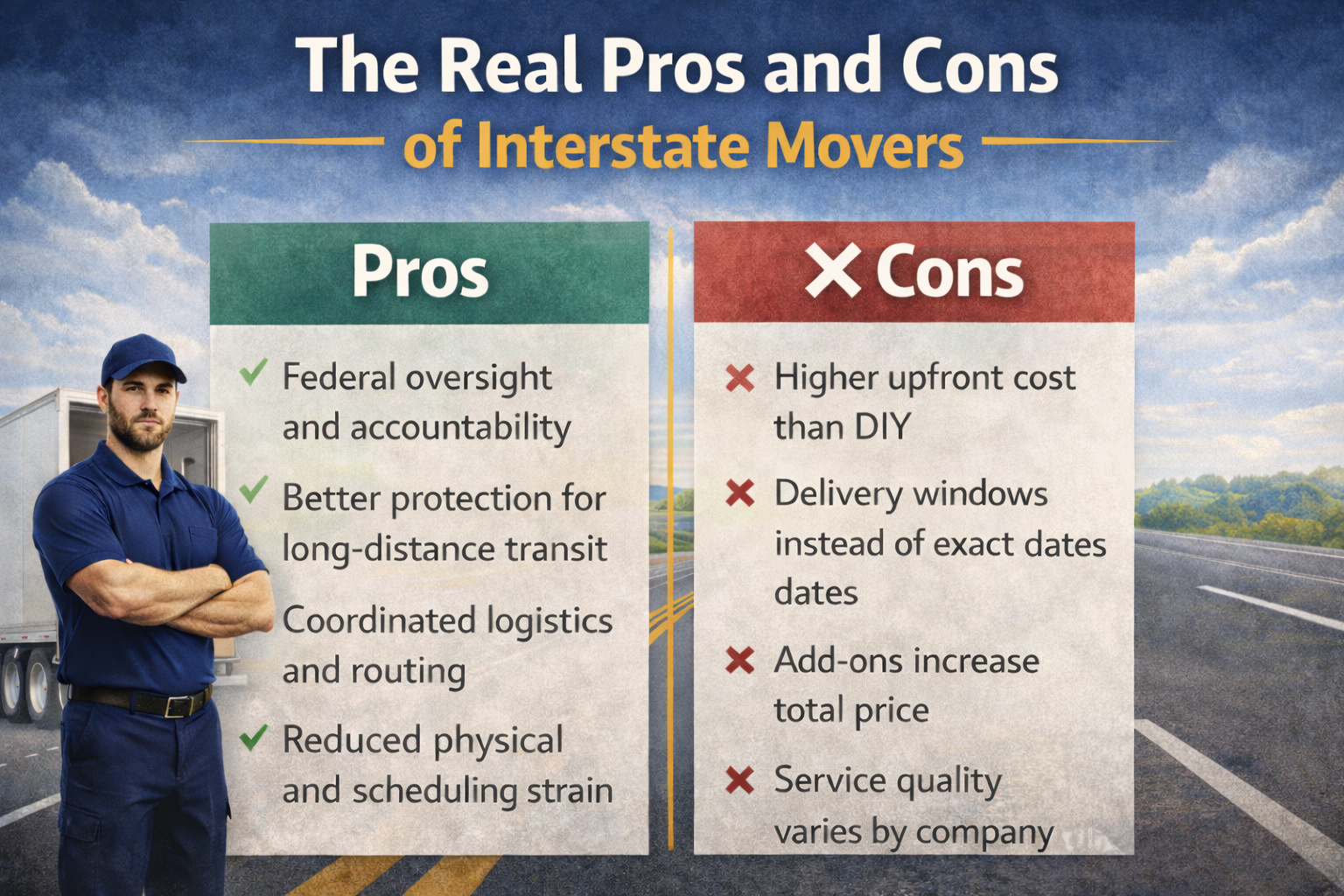
Hiring professionals offers substantial advantages but is not ideal for every situation.
Pros:
-
-
Federal oversight and accountability
-
Better protection for long-distance transit
-
Coordinated routing and scheduling
-
Reduced physical and logistical strain
-
Cons:
-
-
Higher upfront cost than DIY
-
Delivery windows instead of fixed dates
-
Optional services increase the total price
-
Service quality varies by provider
-
The value lies in risk management. Reliable movers reduce uncertainty for complex interstate relocations.
How to Choose the Right Provider Step by Step
-
Confirm move details using a moving out of state checklist
-
Verify USDOT and MC numbers
-
Request at least three written estimates
-
Compare delivery windows, not just price
-
Review included and optional services
-
Confirm valuation coverage and claims procedures
-
Book early and document everything
How to Verify a State to State Mover in 3 Minutes
-
-
Ask for their USDOT and MC numbers
-
Confirm they issue written estimates
-
Verify delivery window terms in writing
-
Ask what triggers shuttle or long-carry fees
-
Confirm inventory and claims procedures
-
Common Moving Mistakes to Avoid
-
-
Choosing the lowest quote without service details
-
Skipping written estimates
-
Ignoring the delivery window language
-
Underestimating packing time
-
Forgetting storage or access needs
-
Booking too late in peak season
-
Frequently Asked Questions
How far in advance should I book?
Four to eight weeks is ideal for most interstate moves.
Are estimates binding?
Movers issue binding or non-binding estimates. Binding estimates lock the price for listed services. Non-binding estimates can change based on actual shipment size, but federal rules limit what can be collected at delivery.
Do movers pack everything?
Packing is optional and usually costs extra.
Can I ship items separately?
Yes, but coordination matters to avoid delivery delays.
Is insurance included?
Basic liability is included; full-value protection costs more.
Do movers handle permits and compliance?
Reputable interstate movers manage required federal transport compliance.
Can delivery dates change?
Yes. Interstate moves use delivery windows rather than guaranteed dates.
Moving Forward With Confidence
Interstate relocation rewards preparation. When you understand pricing, services, timing, geography, and compliance rules, decisions become clearer. Reliable state to state moving companies provide structure, accountability, and protection when the stakes are high. With the proper planning and provider, moving out of state becomes a managed process rather than a gamble.
Data Sources & References
-
-
Federal interstate household goods regulations
-
FMCSA consumer protection standards
-
Industry relocation planning models
-
Verified long-distance moving cost benchmarks
-