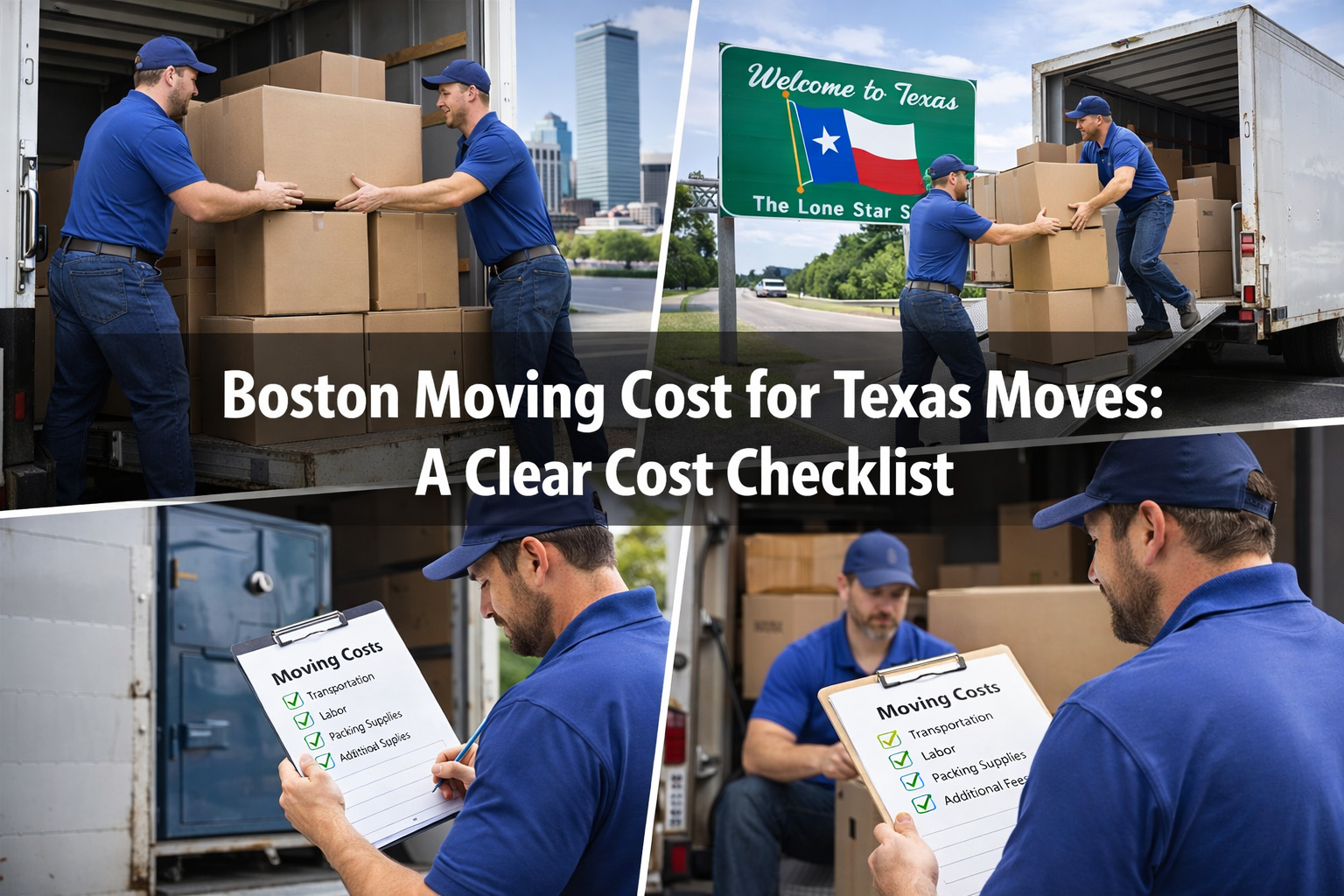
Moving from Boston to Texas is a major relocation. The distance is long. The logistics are complex. And costs can vary widely. Many people underestimate the true Boston moving cost, then face last-minute fees or service gaps. This article breaks down real pricing factors, shows what drives costs up or down, and helps you plan with confidence before booking a mover.
Quick Answer: Boston moving cost from Boston to Texas
The average moving cost for a move from Boston to Texas ranges from $3,800 to $9,500. Final pricing depends on home size, shipment weight, total mileage, service level, and timing. Full-service moves with packing cost more, while flexible dates and partial services can reduce expenses.
Most long-distance moves are priced by weight and distance, not by hourly labor, and are delivered within a delivery window, not on a specific date.
Boston moving cost essentials
-
-
Long-distance mileage is the most significant cost driver
-
Home size and total shipment weight directly affect pricing
-
Full-service packing significantly increases the total cost
-
Summer and end-of-month moves are usually more expensive
-
Accurate inventories prevent surprise charges
-
Why this move needs careful cost planning
A Boston-to-Texas relocation crosses multiple states and time zones. This is not a local move, so hourly rates do not apply. Instead, interstate pricing is based on shipment weight, distance, and services selected.
Without planning, people often misjudge the cost of moving to Boston by thousands of dollars. Common mistakes include underestimating packing needs, choosing peak-season dates, or failing to account for accessorial charges such as long carries, stairs, elevators, or valuation coverage.
The solution is understanding how interstate movers calculate pricing. Once you know the cost structure, you can control the variables that matter most—timing, service scope, and shipment volume.
Why Trust This Guide?
Interstate household moves follow federal transportation standards and pricing frameworks enforced by the Federal Motor Carrier Safety Administration (FMCSA). These rules shape how movers estimate weight, mileage, liability, and delivery terms.
This guidance reflects real-world relocation factors used by licensed interstate movers, including Boston’s urban access challenges and common delivery conditions in Texas.
The focus here is practical accuracy. No assumptions. No promotional bias. Just how costs are actually built.
This content aligns with current FMCSA consumer guidance and standard Bostonance household goods practices as of 2025–2026.
What really drives the cost of moving from Boston to Texas
The Boston moving cost is not a flat number. It is a pricing formula. Each factor below can raise or lower your final total.
Primary pricing factors
-
-
Distance: Boston to Texas averages 1,700–2,000 miles, depending on the destination metro
-
Shipment weight: Heavier loads cost more to transport
-
Home size: More rooms usually mean more weight
-
Packing services: Full packing adds labor and materials
-
Access fees: Stairs, elevators, long carries, or parking restrictions add cost
-
Timing: Summer and end-of-month dates cost more
-
Average cost ranges by home size
|
Home Size |
Estimated Weight |
Typical Cost Range |
|
Studio / 1-bedroom |
2,000–3,500 lbs |
$3,800–$5,200 |
|
2-bedroom |
4,000–6,000 lbs |
$5,200–$6,900 |
|
3-bedroom |
7,000–9,000 lbs |
$6,900–$8,300 |
|
4+ bedroom |
10,000+ lbs |
$8,300–$9,500 |
These figures reflect planning-level estimates for standard full-service interstate moves. Partial-service options can reduce the Boston-to-Texas moving cost but increase personal workload and coordination.
Key terms explained in plain language
Interstate move
A relocation that crosses state lines and follows federal moving regulations.
Binding estimate
A fixed price based on the listed inventory. It does not change unless items or services are added.
Non-binding estimate
An estimate that can change based on the actual shipment weight and services performed.
For non-binding estimates, federal rules limit how much a mover can require at delivery—generally no more than 110% of the written estimate, with any remaining charges billed later, if applicable.
Long carry fee
An extra charge is required when movers must carry items an extended distance from the truck.
Valuation coverage
The level of financial protection for your belongings during transport.
Shipment weight
The total weight of your household goods, measured after loading.
Understanding these terms helps you control total moving costs and avoid billing confusion.
How geography shapes a Boston-to-Texas relocation
Moving from Boston to Texas means more than crossing state lines. It involves very different cities, infrastructure, and delivery conditions.
Most moves follow major interstate routes such as I-90, I-80, and I-40, then branch south toward Texas metros. Boston exits are often narrow, congested, and permit-restricted. Texas cities generally offer wider roads but longer final delivery distances.
-
-
Boston to Dallas–Fort Worth: Suburban neighborhoods, long driveways, and HOA rules can affect access
-
Boston to Houston: Humidity, storms, and traffic variability influence delivery timing
-
Boston to Austin: Growth-driven congestion and limited downtown loading zones
-
Boston to San Antonio: Spread-out neighborhoods and longer carries are common
-
Climate also matters. Boston winters affect loading conditions. Texas heat impacts scheduling and item protection. Furniture and electronics require proper packaging to withstand temperature changes.
Lifestyle differences add context. Texas homes are often larger and ground-level. Boston apartments frequently involve stairs, elevators, parking permits, and strict delivery windows. These differences directly affect labor time and cost.
What movers include by default and what costs extra
Understanding service levels helps you compare estimates accurately.
Standard services are usually included.
-
-
Loading and unloading labor
-
Transportation across state lines
-
Basic furniture protection
-
Disassembly and reassembly of large items
-
Standard valuation coverage
-
These form the base of most interstate quotes and make up the core of the Boston moving cost.
Optional services that increase the total cost
-
-
Full or partial packing
-
Packing materials and boxes
-
Storage before or after delivery
-
Stair, elevator, or long carry fees
-
High-value item handling
-
Expedited delivery windows
-
Optional services add convenience but raise the final bill. Choosing only what you need keeps costs controlled.
Timing your move for cost and convenience
When you move matters almost as much as how you move.
Peak season runs from May through September. Demand is high, prices are rising, and availability is tight. Fall and winter often offer better rates if flexibility is possible.
The weather also plays a role. Winter moves from Boston require weather buffers. Moving into summer in Texas requires heat planning and crew-safety adjustments.
Mid-month and mid-week dates are often cheaper. End-of-month and weekend moves cost more due to demand.
Early booking helps lock in pricing and reduce last-minute premiums.
Weighing the benefits and trade-offs
Every long distance move has advantages and challenges.
Pros
-
-
Professional handling reduces physical strain
-
Predictable logistics over long distances
-
Documentation and accountability protections
-
Time savings compared to DIY options
-
Cons
-
-
Higher upfront cost
-
Less control over exact delivery dates
-
Scheduling depends on carrier routing
-
Requires accurate inventories and planning
-
Understanding both sides sets realistic expectations.
How to plan and choose the right mover

A structured approach reduces risk and stress.
Step-by-step decision checklist
-
Create a detailed home inventory
-
Decide which services you truly need
-
Request written estimates from multiple movers
-
Confirm USDOT and MC numbers match the company name
-
Compare estimates line by line, not just totals
-
Review delivery windows and payment terms
-
Book early and confirm details in writing
Carrier vs broker: A carrier performs the move with its own truck and crew. A broker arranges transport with a carrier. Always confirm who is physically handling your shipment.
Common Moving Mistakes to Avoid
-
-
Accepting verbal estimates
-
Underestimating shipment weight
-
Booking without verifying licensing
-
Ignoring access challenges at either location
-
Choosing based on price alone
-
Skipping valuation coverage review
-
Avoiding these mistakes protects both your budget and belongings.
Frequently Asked Questions
How long does a Boston-to-Texas move take?
Transit usually takes 5–10 days, depending on distance and routing.
Is packing required to use a mover?
No. You can self-pack, but professional packing reduces the risk of damage.
Are estimates legally binding?
Only binding or not-to-exceed estimates lock pricing.
Can I ship a car with my household goods?
Vehicle transport is usually separate and priced independently.
Do movers charge by the hour for interstate moves?
No. Interstate pricing is based on weight, distance, and services.
Is insurance included automatically?
Fundamental valuation is included. Full-value protection costs extra.
Can costs change after booking?
Yes, if inventory or access conditions change.
A long-distance relocation is a significant life step. The correct information makes it manageable. When you understand pricing, services, timing, and geography, you avoid costly surprises.
With clear expectations, accurate inventories, and verified providers, the Boston moving cost becomes a controlled variable—not a risk.
Take time to compare options, ask detailed questions, and plan. Thoughtful preparation leads to a smoother transition.
Data Sources & References
-
-
Federal Motor Carrier Safety Administration (FMCSA) consumer guidance
-
U.S. Department of Transportation interstate moving regulations
-
Standard interstate household-goods pricing practices
-
Urban and long-distance logistics data from licensed carriers
-